
Blog

Understanding Google Search Results

Agency Ten10 • March 20, 2025

1. Introduction

Google processes over 8.5 billion searches every day , making it the most powerful search engine in the world. Understanding how search results are structured is crucial for businesses, marketers, and content creators aiming to improve their online visibility.

Google’s search results page is designed to deliver the most relevant and useful information to users. It includes a variety of result types, from paid ads to organic listings and AI-generated overviews. This guide will break down the different components of Google search results and how to leverage them for better visibility and traffic.

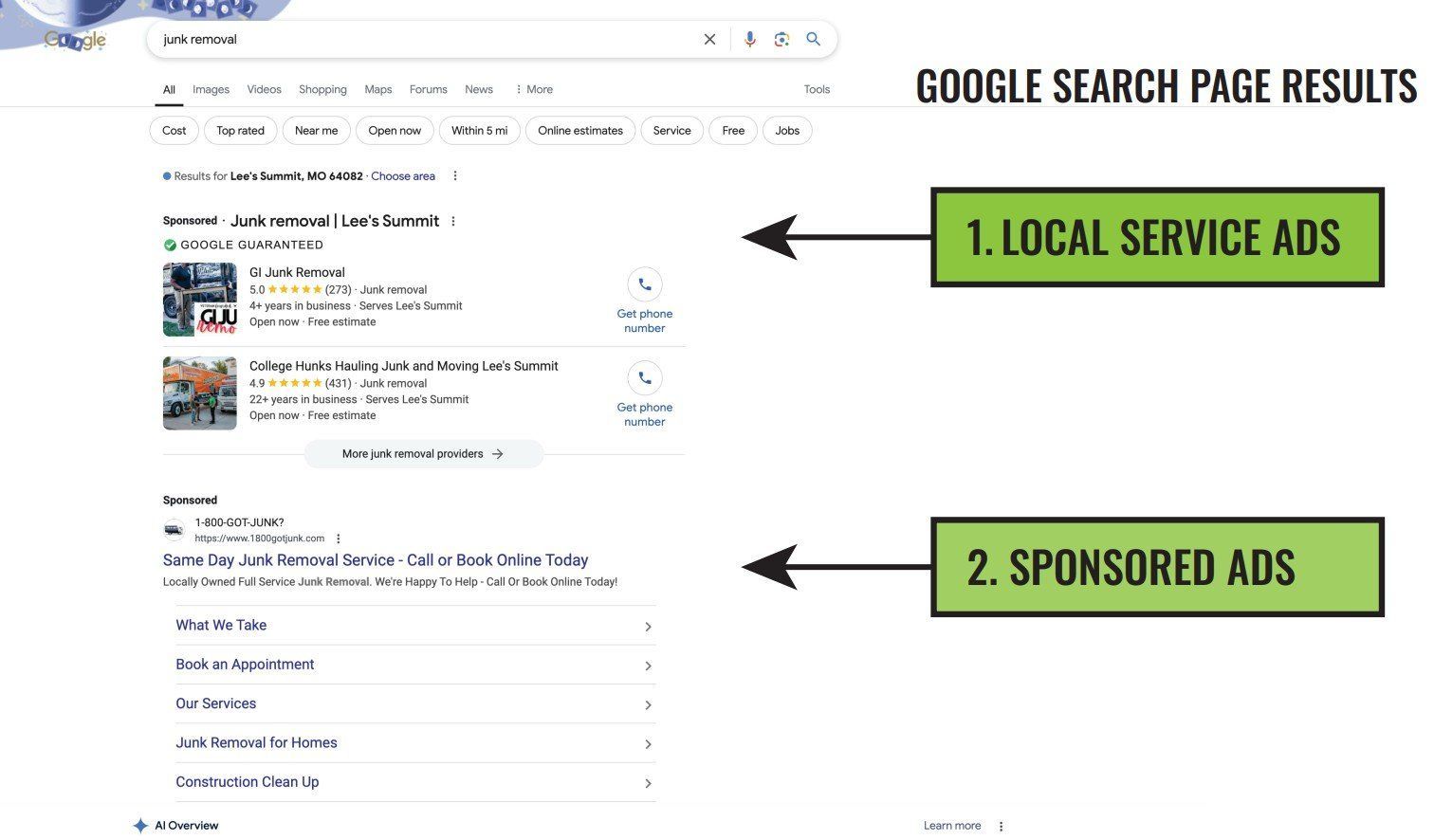
Top of Google Search Results - Local Service Ads & Sponsored Ads
2. Types of Google Search Results

2.1. Local Service Ads

Local Service Ads (LSAs) are a special type of paid ad that appears at the very top of Google search results. They are designed to promote local businesses and services. Unlike traditional ads, LSAs are charged based on leads rather than clicks, making them cost-effective for businesses focused on local clientele.

Key features of Local Service Ads include:

  • Top Placement: LSAs appear above organic search results and other ads.

  • Google Guarantee: Businesses that qualify for LSAs receive a “Google Guaranteed” badge, building trust with potential customers.

  • Pay Per Lead: Advertisers only pay when a user contacts the business directly through the ad.

Local Service Ads are particularly effective for service-based businesses such as plumbers, electricians, and real estate agents. They help businesses connect with local customers quickly and efficiently.

2.2. Sponsored Ads

Sponsored Ads are traditional pay-per-click (PPC) ads that appear at the top and bottom of search results. They are labeled as "Sponsored" or "Ad" to differentiate them from organic results. Sponsored Ads allow businesses to target specific keywords and demographics, making them a powerful tool for driving targeted traffic.

How Sponsored Ads work:

  • Advertisers bid on specific keywords.

  • Google ranks the ads based on a combination of bid amount and ad relevance (Quality Score).

  • Businesses are charged when users click on the ad (Pay-Per-Click).

Sponsored Ads are highly customizable, allowing businesses to target users based on location, device, search history, and more. They provide immediate visibility but require a well-managed budget to maximize ROI.

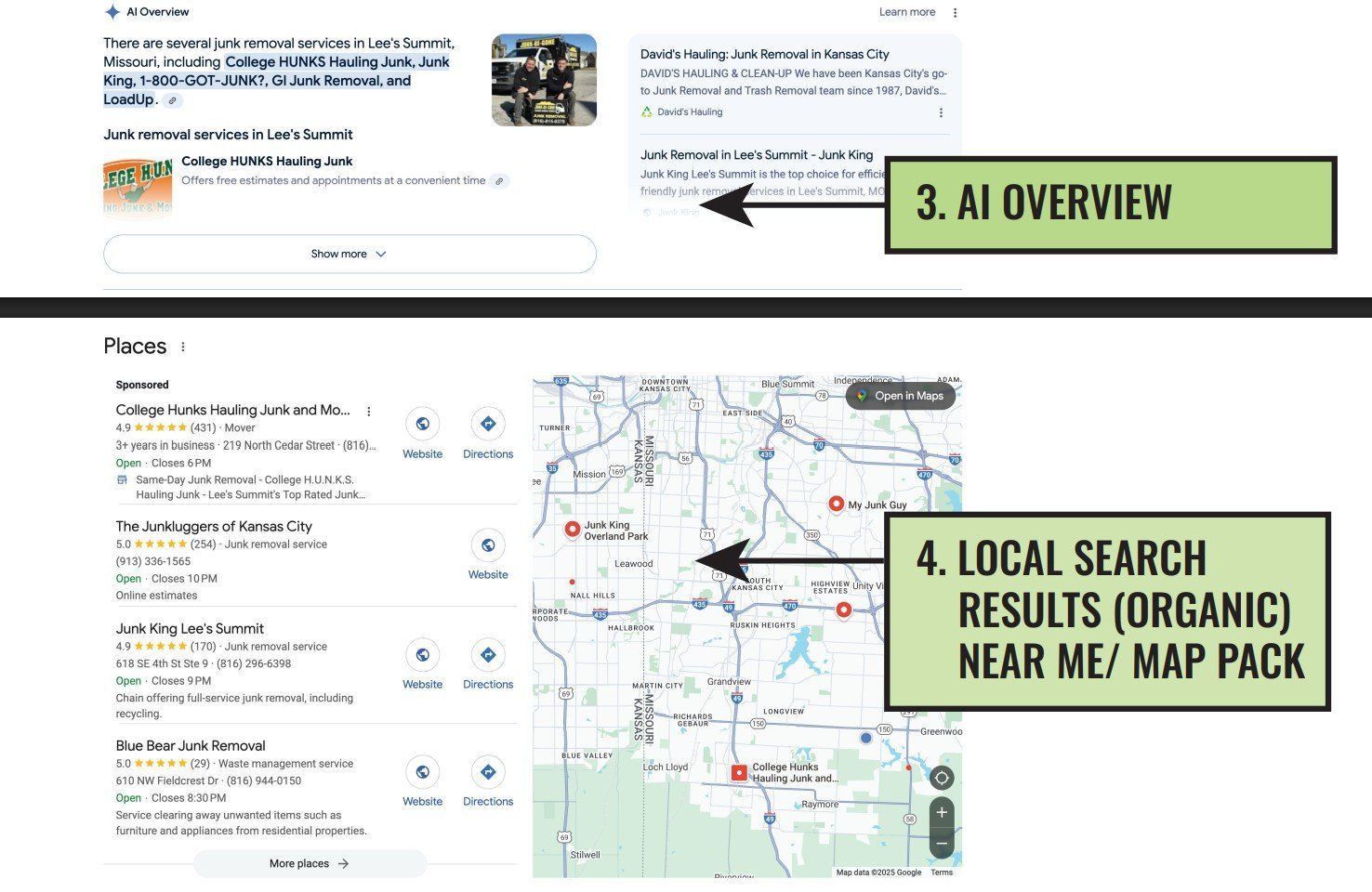
Google Search Results - AI Overview & Local Search (Map Pack)
2.3. AI Overview

The AI Overview is a relatively new feature introduced by Google, where artificial intelligence generates a summary of information based on the search query. This AI-generated snippet appears at the top of the search results, above organic listings and sometimes even above Sponsored Ads.

Key elements of AI Overview:

  • AI Overview provides quick answers to complex questions.

  • It pulls information from multiple sources to create a summarized response.

  • Users are given the option to expand the overview for more details.

AI Overview reflects Google’s push toward improving user experience by providing quick, accurate answers directly within the search results. It also impacts organic traffic since users may find their answers without needing to click through to a website.

2.4. Local Search Results (Organic)

Local Search Results appear when a user includes location-based terms like "near me" or searches for a specific type of business within a geographic area. These results are displayed in the Map Pack — a box showing top-rated local businesses along with their ratings, addresses, and operating hours.

Factors influencing Local Search Rankings:

  • Proximity: How close the business is to the user’s location.

  • Relevance: How well the business matches the search intent.

  • Prominence: The business’s online presence, reviews, and authority.

Optimizing for local search involves improving your Google My Business profile, acquiring positive customer reviews, and ensuring accurate location data.

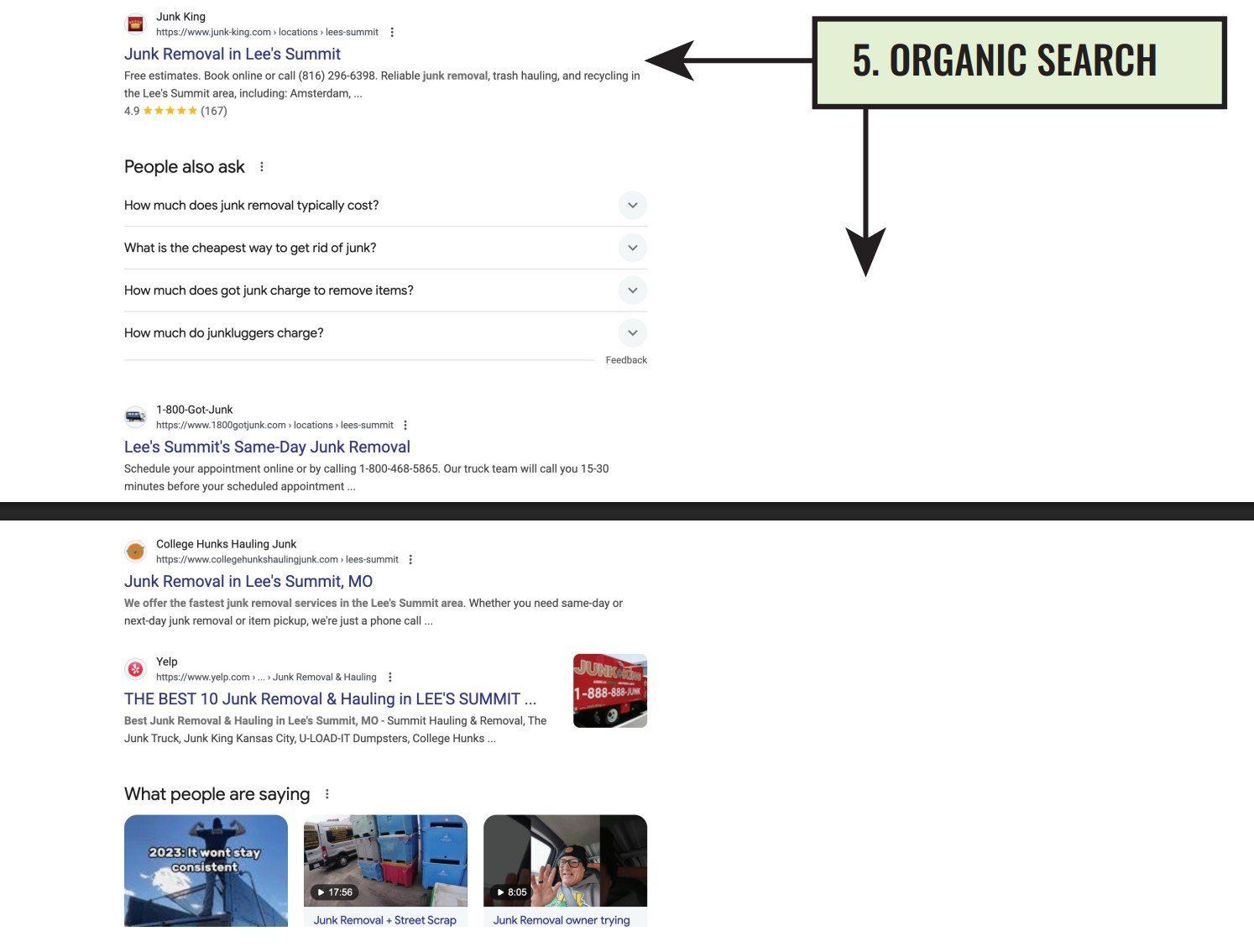
Organic Search Results

2.5. Organic Search

Organic Search results are non-paid listings that appear based on Google's algorithm. These results are ranked according to relevance, authority, and user experience. Unlike ads, organic search rankings cannot be bought — they must be earned through high-quality content and effective SEO practices.

Key factors influencing organic search rankings:

  • Content Quality: Comprehensive, valuable content that matches search intent.

  • Backlinks: The number and quality of external sites linking to your content.

  • User Experience: Fast-loading pages, mobile-friendliness, and intuitive navigation.

Organic search is a long-term strategy that requires consistent content creation, link building, and technical optimization. However, once a site gains authority, it can enjoy sustained traffic without ongoing ad spend.

3. How Google Ranks Search Results

Google’s search algorithm uses hundreds of factors to determine the order of search results. While the exact formula is a secret, the most influential factors include:

  • Relevance: How well the content matches the user’s search intent.

  • Authority: The credibility of the website based on backlinks and domain authority.

  • User Experience: Page load speed, mobile compatibility, and secure browsing (HTTPS).

  • Engagement: How long users stay on the site and their interaction with the content.

4. The Role of SEO in Search Results

4.1. On-Page SEO

On-page SEO includes optimizing title tags, meta descriptions, headers, and content. Including target keywords naturally within content helps improve relevance.

4.2. Off-Page SEO

Off-page SEO involves building backlinks and improving your site’s authority. Guest posting, influencer outreach, and brand mentions can strengthen off-page SEO.

4.3. Technical SEO

Technical SEO covers site performance, mobile-friendliness, and structured data. Improving site speed and fixing crawl errors ensures better indexing by Google.

5. The Rise of AI in Search Results

AI and machine learning are becoming central to search. Google’s RankBrain and BERT algorithms focus on understanding search intent and delivering more personalized results.

6. Strategies to Improve Search Visibility

  • Create high-quality, original content.

  • Use a mix of paid and organic strategies.

  • Optimize for local search and AI-generated results.

  • Build a solid backlink profile.

7. Common Mistakes to Avoid in Search Optimization

  • Keyword stuffing – Overloading content with keywords.

  • Ignoring mobile optimization – Most searches are now mobile-based.

  • Lack of internal linking – Reduces site authority and user engagement.

8. Future Trends in Google Search

  • Increased focus on user experience and core web vitals.

  • Greater use of AI and machine learning in search.

  • Rise of voice search and conversational AI.

9. Conclusion

Understanding how Google search results work is crucial for building a successful online presence. From Local Service Ads to AI Overview, each result type plays a unique role in driving traffic and conversions. By combining effective SEO strategies with a clear understanding of search ranking factors, businesses can improve visibility and gain a competitive edge.

FAQs

1. What’s the difference between sponsored and organic search results?
Sponsored results are paid ads that appear at the top of search results, while organic results are ranked based on Google's algorithm without direct payment.

2. How can I improve my local search ranking?
Optimize your Google My Business profile, gather customer reviews, and maintain accurate business information.

3. How does AI Overview affect organic traffic?
AI Overview may reduce organic traffic since users can get answers directly from the search results without clicking through to a site.

4. Why are backlinks important for SEO?
Backlinks signal to Google that your content is valuable and credible, improving search rankings.

5. How often does Google update its search algorithm?
Google updates its algorithm frequently, with major updates occurring several times a year.

Recent Articles

August 17, 2026
Follow a 30, 60, and 90 day roadmap to win local SEO in Kansas City with checklists, templates, and benchmarks for service businesses to grow visibility.

Show More

Share This Article:

August 17, 2026
Follow a 30, 60, and 90 day roadmap to win local SEO in Kansas City with checklists, templates, and benchmarks for service businesses to grow visibility.
August 10, 2026
Learn proven tactics to drive calls, clicks, and foot traffic with a Kansas City marketing agency using SEO, content, and local strategy for growth.

August 4, 2026
Learn how to set goals, track KPIs, and prove results when hiring a marketing agency in Kansas City for measurable growth and smarter spend.
July 27, 2026
Learn how website design in Kansas City can reflect your neighborhood, values, and customers to build trust, boost visibility, and drive growth
near me search
July 22, 2026
Use this local SEO in Overland Park, KS checklist to win near me searches with citations, reviews, service pages, and neighborhood targeting without big spend.
 Local Visibility
July 17, 2026
Expand reach with Apple Maps, Bing, Nextdoor, and partnerships. Learn practical local SEO in Kansas City tactics that bring steady leads
content marketing
July 7, 2026
Discover how Kansas City content marketing helps service businesses attract local leads, boost search visibility, and grow with a clear plan.
June 30, 2026
Learn how Kansas City SEO services help busy owners boost search visibility, attract local leads, and simplify marketing with clear, practical steps.
branding agency
June 24, 2026
Learn key signs your brand needs a refresh and when to hire a branding agency in Kansas City to sharpen messaging, visuals, and growth strategy
Show More